Floors are the volume job — and the reason steam mops exist. On sealed hard floors, steam plus a pad covers area quickly; canister units with floor brushes handle the same job with more pressure for textured tile.
Quick answer
The EM-519B steam mop (500 ml, about 40 g/min, pad plus motorised polisher) is the dedicated floor tool; the EM-201/202/203/205 canister line works floors through the floor brush with joint. Both routes are sealed-hard-floor tools per the catalog.
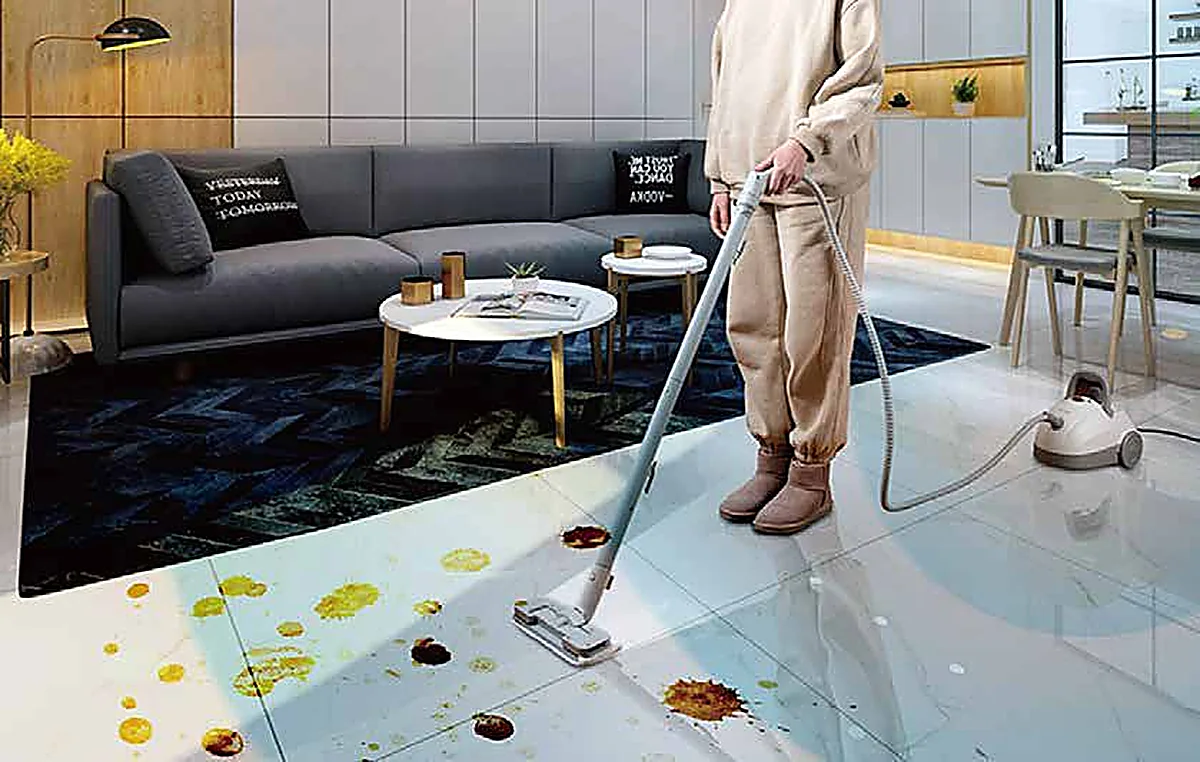
- Daily floors: EM-519B with mop pad; two steam levels on the 519/522 line give control on delicate finishes.
- Deep sessions: canister + floor brush; 2-litre tanks cover large areas in one fill (30 minutes on EM-202).
- Edge and stairs: handheld or converted EM-519B with small brush head.
- Carpets: carpet glider available on the 517/518 platform for refresh passes.
How buyers phrase the floor job: “steam cleaner for sealed hard floors” is the compatibility-first query — the buyer is really asking “is it safe on my floor?”. Answer it in the first sentence of a listing, then sell the mop/canister choice.
Floor claims to avoid: we do not market steam as sanitising or disinfecting. Floor pages that stick to visible results (stain lift, no streaks, fast drying) stay compliant and still sell.
Frequently asked questions
Safe on all hard floors?
The catalog targets sealed hard surfaces. Buyers should carry surface guidance into their manuals; unsealed wood and waxed finishes are not steam targets.
Mop or canister for a floor-first market?
Mops win on convenience and consumables; canisters win on pressure and whole-home versatility. The price ladder supports stocking both.
Floor-care line to build?
Send the market plan — we map mop and canister models to it.